Scaling liquidity management in Billion-Dollar Cryptocurrency markets
Summary
A multi-exchange liquidity and market-making system designed to maintain spreads, depth, and price stability at scale.
Article
For most users, liquidity looks simple. Tight spreads, active order books, and smooth price movement. But behind that is a highly coordinated system operating across multiple exchanges, constantly balancing risk, inventory, and execution.
Liquidity is not a market condition. It is an engineered outcome.
This project focused on building a market-making and liquidity management system for a cryptocurrency with a ~$1B market cap, where consistency and stability were critical.
Why market making at scale is difficult
At small scale, placing orders is enough. At large scale, every action introduces risk.
- Orders get filled → fees are incurred
- Prices move → inventory becomes imbalanced
- Exchanges differ → arbitrage opportunities emerge
And all of this happens across centralized exchanges and DeFi pools simultaneously.
The challenge is not placing liquidity. It is maintaining it under adversarial conditions.
Key system challenges
A. Market making losses: Every filled order is not pure profit. Taker fees reduce margins, spread capture is not guaranteed and frequent fills increase cost.
B. Impermanent loss and inventory drift: When markets move in one direction. One side of the book gets depleted, holdings become skewed and rebalancing introduces losses.
C. Arbitrage exposure: Operating across multiple exchanges creates inefficiencies. Price differences invite arbitrageurs, external traders capture mispricing and inventory is drained from one side.
D. Exchange-level risks: Centralized exchanges introduce non-technical risks. API instability and outages, breaking changes & security concerns and fund safety. This makes system reliability dependent on external actors.
E. Strict exchange requirements: To stay listed and active minimum liquidity depth must be maintained, daily volume thresholds must be met, and spreads must remain within defined ranges. Failing these can lead to delisting.
F. Cross-exchange coordination: Liquidity is not local; the price and depth must align across exchanges, DeFi and CeFi markets influence each other and actions on one venue impact others. This turns the system into a coordination problem, not just execution.
What we built
The solution was designed as a set of coordinated services, each responsible for a specific part of the liquidity lifecycle.
A. Orderbook management service: This is the core execution layer. Places and maintains bid/ask orders across exchanges, adjusts spreads dynamically based on market conditions and ensures required depth and volume are maintained. The system continuously recalibrates based on: Market volatility, inventory position and exchange-specific constraints.
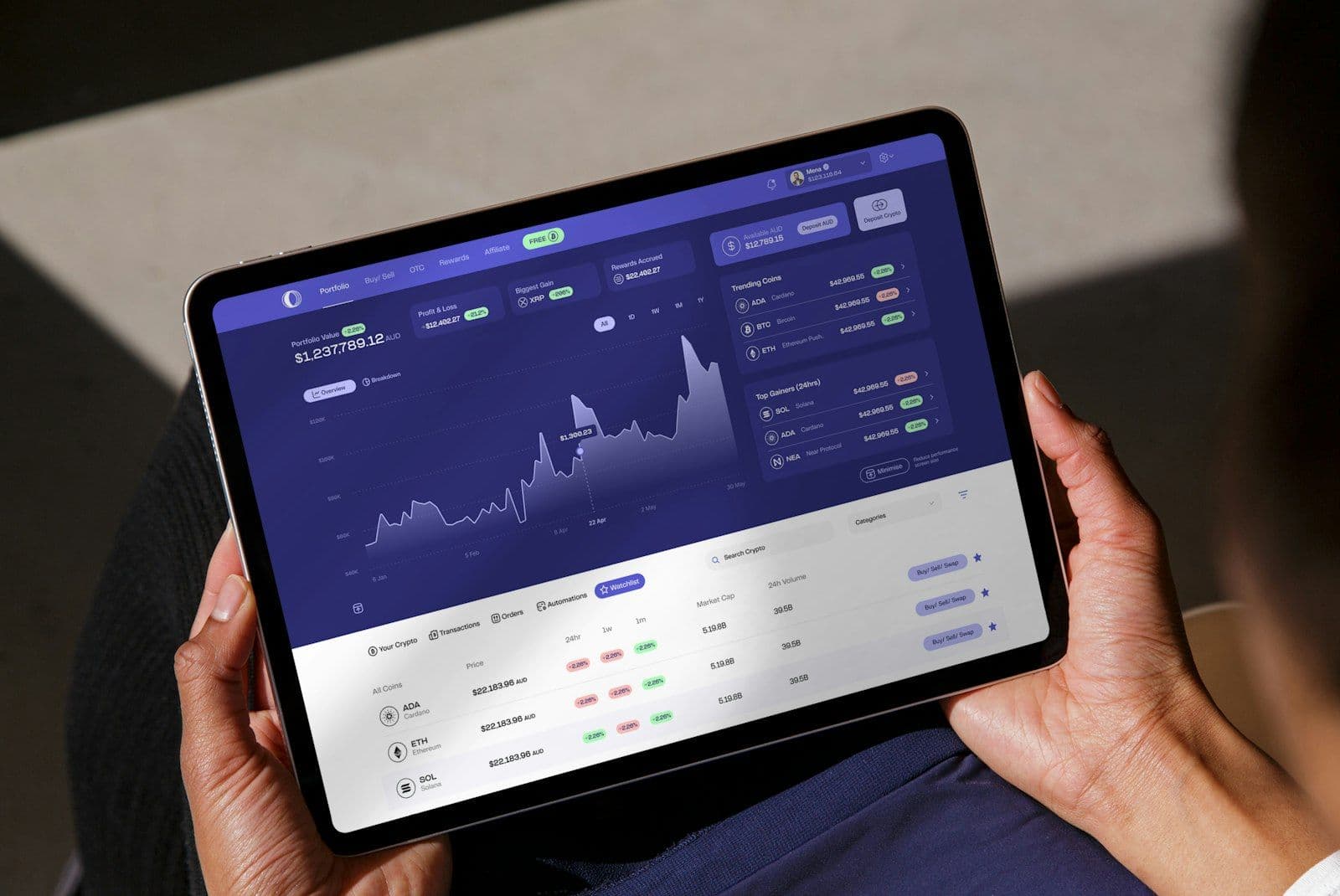
B. Monitoring and analytics dashboard: This provides essential visibility at scale, enabling operators to track liquidity depth across exchanges, trading volume and activity, fees and realized losses, as well as inventory distribution. By consolidating these metrics into a single view, the dashboard not only highlights overall performance but also reveals areas of potential risk exposure, giving operators the clarity they need to make informed decisions and maintain resilience in dynamic market conditions.
C. Price action service: In certain market conditions, passive liquidity alone is insufficient, which is why these service steps in with targeted interventions when necessary. It actively supports price stability during periods of heavy selling pressure, executes controlled buybacks to restore balance, and liquidates inventory under favorable conditions to optimize outcomes. Importantly, this is not a constant or indiscriminate process, but rather a deliberate and measured response triggered only when the system detects significant imbalances.
D. Fund management and rebalancing service: Capital must move intelligently across exchanges, and this service ensures that by rebalancing inventory across venues, shifting funds when liquidity is uneven, and withdrawing assets when risks are detected. Acting as both a safety mechanism and an efficiency layer, it sits on top of execution to provide stability and responsiveness, ensuring that capital flows are optimized while safeguarding against potential vulnerabilities.
System architecture overview
At a high level, the system operates as:
- Execution layer managing order books
- Intelligence layer monitoring performance and risk
- Coordination layer aligning actions across exchanges
- Capital layer handling fund movement and safety
These layers work together to maintain global consistency.
Designing for adversarial environments
Unlike traditional systems, this operates in a competitive environment.
- Arbitrageurs exploit inefficiencies
- Exchanges introduce unpredictability
- Market conditions shift rapidly
This means the system must: React quickly → Avoid predictable patterns → Continuously rebalance
Stability is achieved not by avoiding volatility, but by adapting to it.
What this system enables
With all components working together, the system delivers consistent liquidity across multiple exchanges, ensuring smoother market operations. It maintains controlled spreads and stable price action, reducing volatility and fostering confidence among participants. At the same time, it minimizes exposure to arbitrage and inventory risk, while remaining aligned with exchange requirements. This integrated approach creates a resilient framework that balances efficiency, stability, and compliance.
Most importantly: The asset behaves like a low-volatility instrument despite operating in a highly volatile market.
Lessons from building liquidity infrastructure
A few key insights emerged:
- Liquidity must be actively managed, not passively provided
- Inventory risk is as important as price risk
- Cross-exchange coordination is critical at scale
- External dependencies (exchanges) are the biggest unknown
Final thoughts
Market making is often misunderstood as placing buy and sell orders. In reality, it is a continuous balancing act between risk, capital, and market behavior. At scale, it becomes a systems problem.
Liquidity is not something you add to a market. It is something you maintain through disciplined infrastructure.
And when done correctly, it transforms how an asset behaves, making it more stable, more reliable, and more investable.
You can read complete case study here: https://www.zobyt.com/work/liquidity-management-and-market-making-for-cryptocurrency-with-1busd-market-cap
...................................................................................................................................................................
At Zobyt, we have built several systems like this to enable transparency and efficiency through technology . If you’re interested in something similar, do reach out to discuss@zobyt.com
Related Posts
- Mining infrastructure and node governance in Cryptocurrency systems (Blog Post)
- Metaguard: Building a preventive transaction security layer using simulation and trace analysis (Blog Post)
- GUI based python trader MVP: building an end-to-end trading system with a visual interface (Blog Post)
- Liquidity provider yield & risk intelligence system: building accurate LP analytics across chains (Blog Post)